
If your child’s dentist just mentioned a “baby root canal,” it’s normal to feel a little alarmed — the phrase sounds intense for a tooth that’s going to fall out anyway. The good news is that a baby root canal, more accurately called a pulpotomy, is a routine, well-tolerated procedure that pediatric dentists perform every day to save a decayed baby tooth and keep your child comfortable. Here’s what it actually involves, why it’s often the better option over pulling the tooth, and what to expect from start to finish.
What Is a Baby Root Canal?
A baby root canal — the clinical term is pulpotomy — is a treatment that removes decayed or infected tissue from the pulp (the inner nerve and blood vessel chamber) of a baby tooth while leaving the healthy pulp in the root intact. The tooth is then sealed and typically topped with a crown to protect what’s left of the structure.
It’s easy to confuse this with an adult root canal, but the two procedures are different. An adult root canal (technically called a pulpectomy) removes all of the pulp tissue from the entire length of the tooth, including the roots. A pulpotomy only removes the affected pulp in the crown of the tooth, leaving the pulp in the roots healthy and in place — which matters because baby tooth roots are designed to dissolve naturally as the permanent tooth pushes through.
Why Would My Child Need a Baby Root Canal?
A pulpotomy is usually recommended when a cavity has progressed deep enough to reach the pulp, or when a tooth has been injured badly enough to expose or irritate the nerve. Left untreated, a cavity that reaches the pulp can lead to infection, abscess, and pain — and can also damage the permanent tooth developing underneath. Common signs that prompt a dentist to recommend a baby root canal include:
- A cavity that’s visibly deep or has been growing for a while without treatment
- Spontaneous tooth pain, especially pain that wakes a child up at night
- Sensitivity that lingers well after eating something hot or cold
- Swelling or a small bump on the gum near the tooth
- Darkening or graying of the tooth after an injury
If your child has been diagnosed with baby teeth cavities that were caught early, a filling is often enough. A baby root canal becomes necessary once decay has advanced past the point where a filling alone can resolve it.
Why Not Just Pull the Tooth?
It might seem simpler to just extract a badly decayed baby tooth, especially since it’s not permanent — but baby teeth do far more than most parents realize. They hold space for the permanent tooth waiting underneath, guide proper jaw and bite development, and support chewing, speech, and self-confidence. Pulling a tooth too early can allow neighboring teeth to drift into the empty space, which often leads to crowding or misalignment once the permanent tooth is ready to come in.
Whenever a tooth is restorable, the American Academy of Pediatric Dentistry considers a pulpotomy the preferred treatment over extraction, precisely because it preserves the tooth’s role as a natural space maintainer until it’s ready to fall out on its own.
What Happens During a Baby Root Canal?
A pulpotomy is typically completed in a single visit and follows a predictable process:
- Numbing: The area is numbed with local anesthetic, and many pediatric dentists also offer nitrous oxide or other comfort measures for anxious kids.
- Removing decay: The dentist removes the decayed portion of the tooth and the affected pulp in the crown.
- Medicating the healthy pulp: A medicated dressing is placed over the remaining healthy pulp in the root to calm inflammation and prevent further infection.
- Sealing the tooth: The tooth is filled to seal out bacteria.
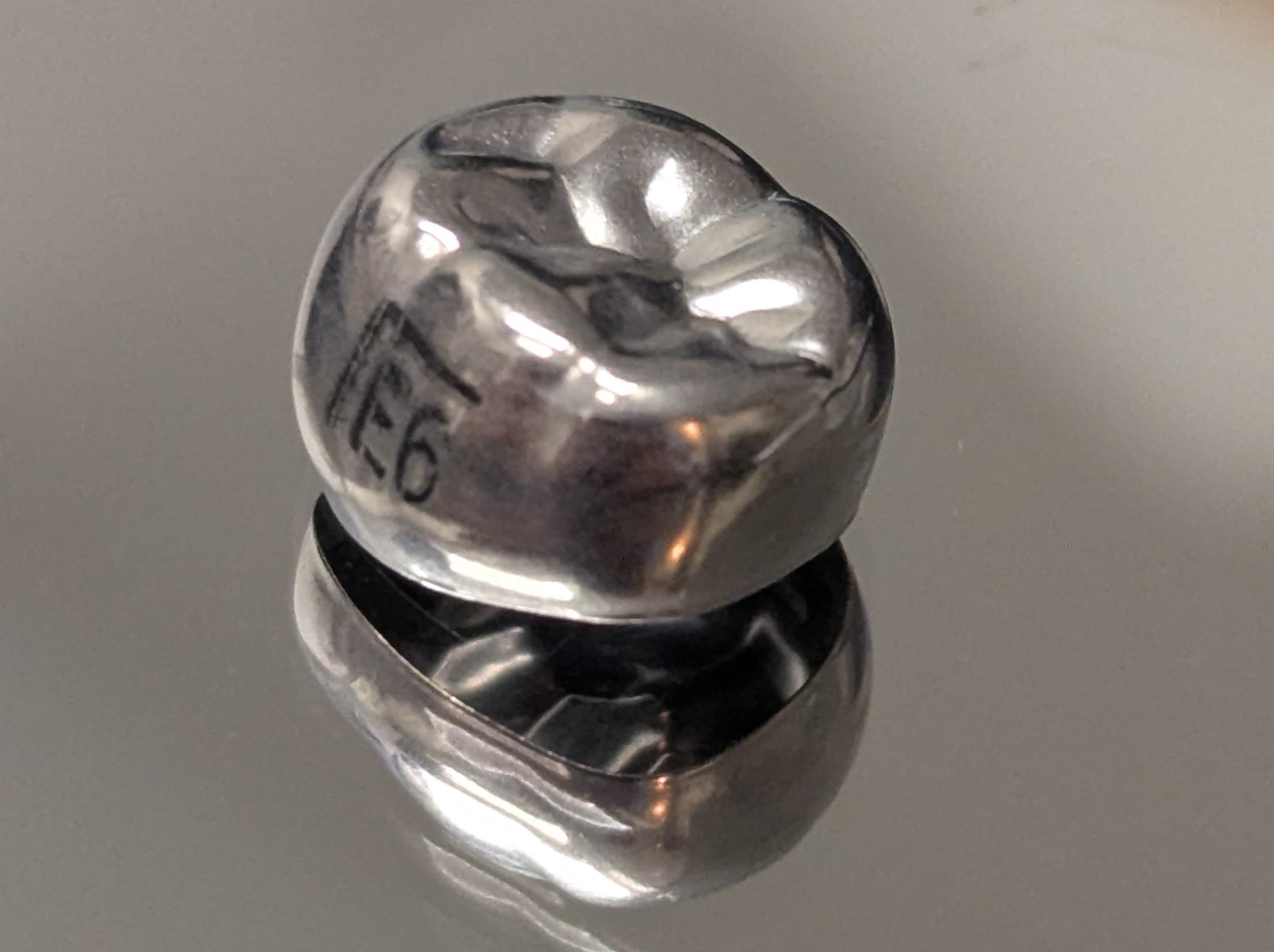
- Placing a crown: Because a tooth that’s needed a pulpotomy has lost significant structure, a stainless steel or tooth-colored crown is usually placed on top to protect it until it naturally falls out.
Most kids do very well with the procedure and describe it as similar to getting a filling — a little numbness and some noise, but no significant pain during treatment.
Is a Baby Root Canal Painful?
The procedure itself is performed under local anesthesia, so children shouldn’t feel pain during treatment. Some mild soreness or tenderness in the area is normal for a day or two afterward, similar to recovering from a filling, and is usually manageable with children’s acetaminophen or ibuprofen if needed. Most kids return to normal eating and activity the same day or the next.
Does It Affect the Permanent Tooth Underneath?
This is one of the most common questions parents ask, and it’s a fair one. When performed correctly on a tooth that’s a good candidate for the procedure, a pulpotomy does not damage the permanent tooth developing below it. In fact, the entire point of the procedure is to protect that developing permanent tooth by removing the infection before it can spread toward it. Your pediatric dentist will evaluate X-rays first to confirm the tooth is a good candidate before recommending a baby root canal.
How Long Does Recovery Take?
Recovery from a baby root canal is typically quick. Numbness wears off within a few hours, and any mild soreness usually resolves within a day or two. The crown placed over the tooth is durable and designed to last until the tooth is naturally lost, requiring no special care beyond normal brushing and flossing.
Helping Your Child Feel Comfortable
It’s natural for kids — and parents — to feel nervous when a baby root canal is on the calendar. A few things can make the visit go more smoothly:
- Use simple, honest language. Explain that the dentist is going to help fix a sick tooth so it stops hurting, without going into graphic detail about needles or drills.
- Avoid words like “hurt” or “shot.” Pediatric dental teams are trained to use kid-friendly language (“sleepy juice,” “tooth counting”) that keeps the visit calm.
- Ask about comfort options. Many practices, including ours, offer nitrous oxide or other sedation options for anxious or younger children, which wear off within minutes of treatment ending.
- Plan a low-key afternoon. A quiet activity at home after the appointment gives your child time to fully shake off any numbness before eating or playing normally.
A pediatric dentist’s office is designed specifically with young patients in mind — from the environment to the way procedures are explained — which makes a big difference in how a child experiences a baby root canal compared to a general dental office.
Pulpotomy vs. Pulpectomy vs. Extraction
Parents often hear a few different terms thrown around and aren’t sure how they differ:
- Pulpotomy (baby root canal): Removes only the affected pulp in the crown of the tooth, leaving the healthy pulp in the roots intact. This is the most common option for baby teeth with a cavity that has reached the pulp but where the root pulp is still healthy.
- Pulpectomy: Removes pulp tissue from the entire tooth, including the roots, similar to an adult root canal. This is used when infection has spread further into the root.
- Extraction: Removing the tooth entirely. This is generally considered a last resort for baby teeth because of the space-maintenance and alignment issues it can cause, and is typically only recommended when a tooth can’t reasonably be saved.
Your pediatric dentist will recommend whichever option gives your child’s tooth — and the permanent tooth waiting underneath — the best long-term outcome.
Frequently Asked Questions
Are baby root canals necessary?
When a cavity has reached the pulp of a baby tooth, a pulpotomy is usually the best way to relieve pain, stop the spread of infection, and keep the tooth in place until it naturally falls out — protecting the permanent tooth developing underneath in the process.
What is a baby root canal called?
The clinical name is a pulpotomy. It’s sometimes informally called a “baby root canal” because it’s similar in concept to an adult root canal, though the procedure itself is less extensive.
How much does a baby root canal cost?
Cost varies based on the tooth and whether a crown is needed, and many dental insurance plans cover a portion of the procedure. Families without insurance can ask about our Membership Plan, which includes a discount on treatment.
How long does a baby root canal take?
Most pulpotomies are completed in a single appointment, typically 30 to 60 minutes depending on the tooth and whether a crown is placed the same day.
Does a root canal on baby teeth affect the permanent tooth?
No — when appropriate for the tooth, a pulpotomy is performed specifically to protect the permanent tooth developing underneath by clearing the infection before it can spread. Your dentist confirms candidacy with an X-ray beforehand.
Schedule an Evaluation in Round Rock
If your child has a deep cavity, tooth pain, or an injury that might need a baby root canal, don’t wait for it to get worse. At Destination Pediatric Dentistry in Round Rock, TX, we welcome new patients ages 0–18 and take a gentle, straightforward approach to explaining exactly what your child needs and why.
Don’t have dental insurance? Our Membership Plan makes treatment more affordable:
- Ages 3–12: $434/year — 2 exams, 2 cleanings, X-rays, fluoride, and 15% off treatment
- Ages 13+: $481/year — same great benefits
We proudly serve families throughout Round Rock, Georgetown, Cedar Park, and Leander. Call us today at (737) 239-0123 or schedule online. We are open Tuesday through Friday, 8:00 AM – 4:30 PM.
Destination Pediatric Dentistry
3100 Farm To Market 1431, Suite 400
Round Rock, TX 78681
(737) 239-0123