
If your child’s dentist has recommended dental sealants for kids, you might have questions: What exactly are they? Are they safe? Does my child actually need them? You’re not alone — sealants are one of the most commonly recommended yet least understood preventive treatments in pediatric dentistry. The good news is that dental sealants for kids are a simple, painless, and highly effective way to protect your child’s back teeth from cavities before they ever start.
What Are Dental Sealants?

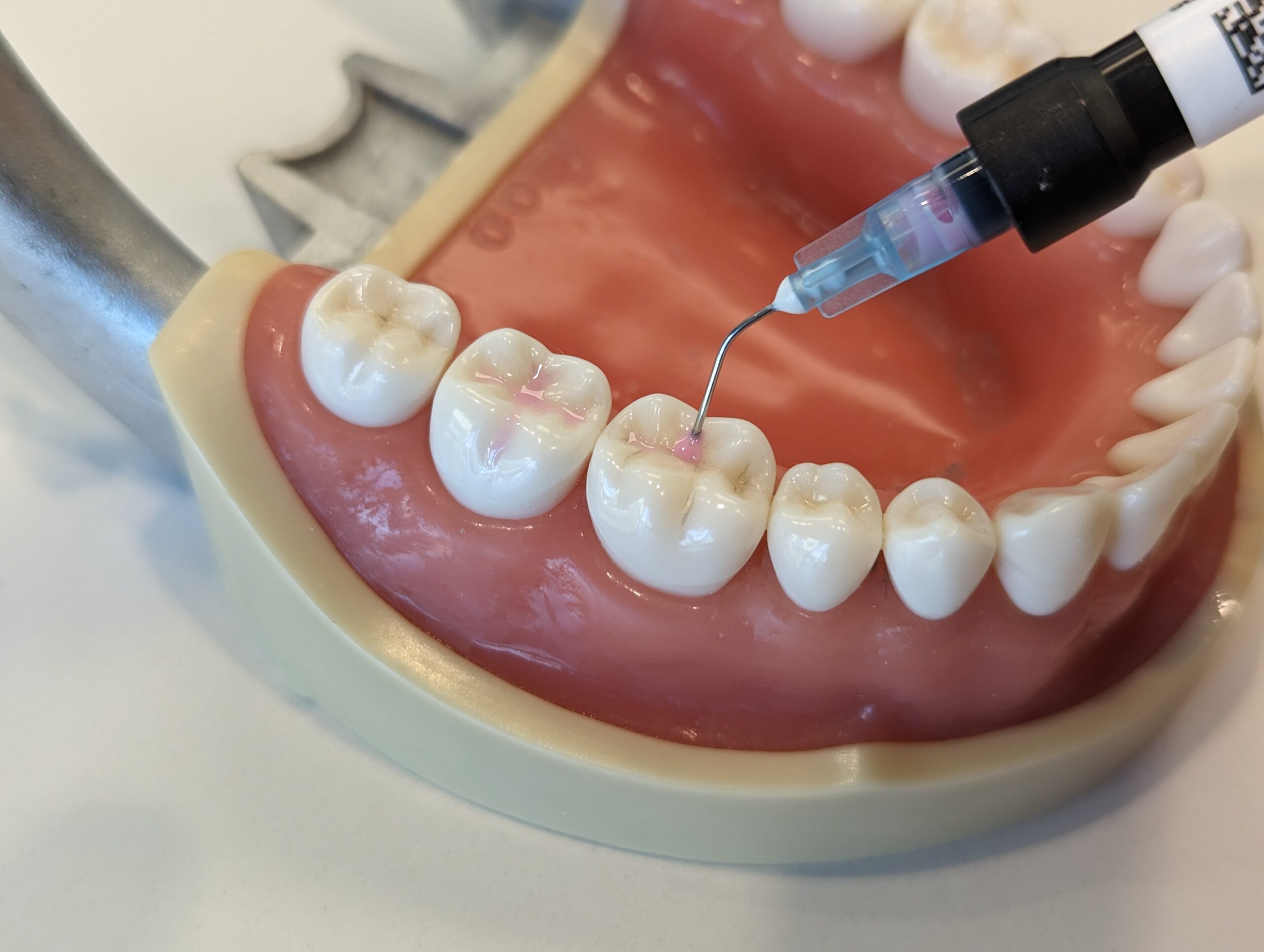
Dental sealants are thin, protective coatings — usually made of plastic or resin — that are painted directly onto the chewing surfaces of the back teeth (molars and premolars). Once applied and hardened, they create a smooth barrier that seals out food particles, bacteria, and plaque that would otherwise settle into the grooves and cause cavities.
Think of it like applying a clear coat to a wood surface. The coating does not change how the tooth looks or feels — it just protects it. Dental sealants for kids have been used safely by dentists for over 40 years, and the research supporting their effectiveness is extensive.
According to the American Academy of Pediatric Dentistry (AAPD), sealants can reduce the risk of cavities in back teeth by nearly 80%. That is a significant number — especially since the back molars are responsible for the vast majority of childhood cavities.
Why Are Back Teeth So Prone to Cavities?
To understand why dental sealants for kids matter so much, it helps to understand why molars are such a common site for cavities in children.
Unlike the smooth surfaces of front teeth, molars have a complex landscape of pits and fissures on their chewing surfaces. These tiny crevices are perfect for trapping food particles and bacteria — and they are often too narrow for toothbrush bristles to fully clean. Even a child who brushes twice a day and flosses regularly can have bacteria hiding in places where their toothbrush simply cannot reach.
This is especially true for younger children who are still developing their fine motor skills and may not brush as thoroughly as adults. The combination of hard-to-reach grooves, developing brushing habits, and a diet that often includes sugar makes the molars especially vulnerable to decay.
Are Dental Sealants for Kids Safe?
Safety is a top concern for parents, and it is a completely fair question. Some parents have heard concerns about BPA — a chemical found in some plastics — and wondered whether dental sealants might contain it.
The short answer: dental sealants for kids are considered safe. The American Dental Association (ADA), the AAPD, and the CDC all support the use of dental sealants for children. While some sealant materials may contain trace amounts of BPA, the exposure is extremely low — far lower than what a child encounters from everyday items like food packaging, receipts, or certain plastics. Studies consistently show that any BPA exposure from sealants dissipates within hours and does not reach levels of concern.
At Destination Pediatric Dentistry, we use materials carefully selected with both effectiveness and safety in mind. If you have questions about the specific products we use, our team is always happy to discuss them with you before your child’s appointment.
At What Age Should Kids Get Dental Sealants?
Timing matters when it comes to dental sealants for kids. The ideal window is shortly after the molars erupt — before cavities have a chance to form. Applying a sealant to a tooth that already has decay would seal the bacteria in, which is why early application is key.
- First permanent molars typically come in around ages 6–7. Getting sealants on these teeth as soon as they are fully erupted gives them maximum protection during the cavity-prone elementary school years.
- Second permanent molars usually erupt around ages 11–13. Sealing these teeth shortly after they come in protects them through the teen years.
- Baby teeth can also benefit from sealants in some cases — particularly if your child has deep grooves or a history of cavities. While baby teeth are eventually lost, they play important roles in speech, chewing, and holding space for permanent teeth.
Your pediatric dentist will evaluate your child at each visit and recommend dental sealants for kids when the timing is right. There is no universal right age — it depends on when the teeth erupt and how the enamel looks once they are in.
How Are Dental Sealants Applied?
One of the most reassuring things about dental sealants for kids is that the application process is fast, completely painless, and requires no drilling or anesthesia. Here is what to expect:
- Cleaning: The tooth is thoroughly cleaned and dried so the sealant can bond properly.
- Conditioning: A mild acidic solution is applied briefly to slightly roughen the tooth surface, helping the sealant adhere. This is rinsed off right away.
- Application: The liquid sealant material is painted directly onto the chewing surface, flowing into all the pits and grooves.
- Curing: A special curing light hardens the sealant in place within seconds.
- Check: Your dentist checks your child’s bite and smooths any rough edges to ensure comfort.
The entire process takes only a few minutes per tooth. Most kids barely notice anything is happening — it feels very similar to a routine cleaning appointment. There is no recovery time and no restrictions on eating or drinking afterward. Your child can go straight back to school or activities right away.
How Long Do Dental Sealants Last?
With proper care, dental sealants for kids can last anywhere from 5 to 10 years. Your child’s dentist will check the condition of existing sealants at every routine visit and touch them up or reapply them if needed.
Sealants can chip or wear down over time — especially if your child grinds their teeth, chews ice, or bites on hard objects. But even a partially worn sealant still provides some protection, and reapplication is quick and painless. Your dentist can spot any areas that need attention before a problem develops.
Does My Child Actually Need Dental Sealants?
Not every child needs dental sealants — but most children can benefit from them, and the AAPD recommends them as a key preventive tool. Here are some situations where dental sealants for kids are especially worth considering:
- Deep pits and grooves on the chewing surfaces of back teeth — some children are born with deeper fissures that are harder to clean regardless of brushing habits
- History of cavities — children who have already had one cavity are at significantly higher risk of developing more
- Difficulty brushing thoroughly — younger children, children with sensory sensitivities, or kids who resist toothbrushing may be at elevated risk
- Diet high in sugar or carbohydrates — frequent snacking or sugary drinks increase cavity risk considerably
- Inadequate fluoride exposure — if your family uses well water or your child does not use fluoride toothpaste consistently
Even if your child has healthy teeth with excellent brushing habits, your dentist may still recommend dental sealants for kids as a precautionary measure. Prevention is almost always more cost-effective than treatment — a sealant costs a fraction of what a filling does, and it is a much better experience for your child than sitting through a restorative procedure.
Are Dental Sealants Covered by Insurance?
Many dental insurance plans do cover dental sealants for kids — typically for children under age 14 or 16, on permanent molars only. Coverage varies widely by plan, so it is worth calling your insurance company to confirm what is included before your child’s appointment.
If your family does not have dental insurance — or if your plan does not cover sealants — our Membership Plan at Destination Pediatric Dentistry makes preventive care affordable without the complexity of insurance paperwork:
- Ages 3–12: $434/year — includes 2 exams, 2 cleanings, X-rays, fluoride, and 15% off all treatment (including sealants)
- Ages 13+: $481/year — same great benefits, no insurance required
No waiting periods, no annual maximums, and no claims to file. Just straightforward, affordable pediatric dental care. Learn more about our Membership Plan here.
Dental Sealants vs. Fluoride: Does My Child Need Both?
Parents sometimes wonder whether fluoride treatments and dental sealants for kids do the same job. They do not — they work differently and complement each other.
Fluoride strengthens the entire tooth surface by hardening the enamel, making it more resistant to acid attacks from bacteria. It is most effective on smooth tooth surfaces and in remineralizing early areas of decay.
Dental sealants act as a physical barrier specifically on the chewing surfaces of back teeth, where fluoride alone has limited ability to reach the deepest grooves and fissures.
Together, fluoride and dental sealants for kids give your child comprehensive, layered protection. Most pediatric dentists — including ours at Destination Pediatric Dentistry — recommend both as part of a complete preventive care plan.
Get a Sealant Evaluation in Round Rock
Wondering if your child is a good candidate for dental sealants? The best way to find out is with a professional evaluation. At Destination Pediatric Dentistry in Round Rock, TX, we make preventive care a priority — because protecting your child’s smile today means fewer cavities, fewer fillings, and less stress for your whole family down the road.
We proudly serve kids ages 0–18 throughout Round Rock, Georgetown, Cedar Park, and the surrounding communities. We are welcoming new patients and would love to meet your family. Call us today at (737) 239-0123 or schedule online to get your child started with a comprehensive exam. We are open Tuesday through Friday, 8:00 AM – 4:30 PM.
Destination Pediatric Dentistry
3100 Farm To Market 1431, Suite 400
Round Rock, TX 78681
(737) 239-0123